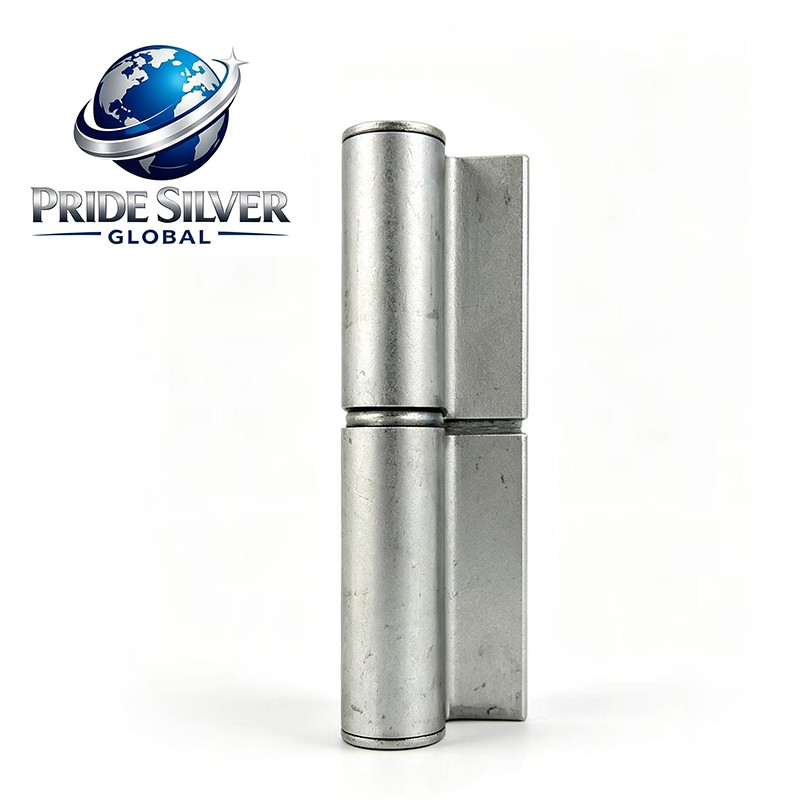
Selecting the right hinge for a metal door is a structural decision as much as a hardware choice. The weld-on barrel hinge vs weld-on bullet hinge for metal doors comparison comes down to how each design carries load, how it installs, and how it wears over time. Neither type is universally superior; each suits different door weights, frame conditions, and swing requirements.
Weld-On Barrel Hinge vs Weld-On Bullet Hinge: Core Design Differences
Both hinges are permanently attached by welding, which distinguishes them from bolt-on or screw-fixed hardware. The difference lies in the geometry of the pivot and how force travels from the door leaf into the frame.
How Barrel Hinges Carry Load Through a Cylindrical Knuckle
A barrel hinge uses a cylindrical knuckle, often a machined or formed barrel, that houses a pin running through its center. The door leaf and frame each attach to opposing sides of the barrel, either directly or through mounting plates. Load is transferred through the barrel wall and the pin, distributing force around the cylinder rather than concentrating it at a single point. This cylindrical geometry tends to spread stress across a larger contact area, which is relevant when the door is heavy or when the hinge must resist sagging over many cycles.
How Bullet Hinges Transfer Load Through a Tapered Pin and Strap
A bullet hinge typically consists of a tapered pin that seats into a matching receiver, with a strap or leaf welded to the door and the pin assembly welded to the frame. The tapered interface self-centers as the door closes, and load passes through the pin-to-receiver contact zone and the welded strap. Because the strap projects from the door face, the hinge introduces a lever arm that converts door weight into bending stress at the weld. This design is compact and allows quick leaf removal when the pin is lifted, but the load path is more concentrated than in a barrel hinge.
Load Capacity Considerations for Metal Door Hinges
Hinge load capacity is not a single number; it depends on the interaction of door mass, hinge count, spacing, and the quality of the welded connection. Manufacturers publish capacity ratings for specific products, and those ratings should be treated as the reference point rather than generalized figures.
Door Weight, Leaf Thickness, and Hinge Spacing
Heavier doors require either more hinges or hinges with greater load ratings. Leaf thickness matters because thin metal can distort under hinge loads, especially when welds concentrate heat and stress in a small area. Hinge spacing also affects how weight is distributed: placing hinges farther apart reduces the load on each individual hinge and limits deflection at the free edge of the door. A common practice is to position hinges at the top and bottom thirds of the door height, with additional hinges evenly spaced between them as weight increases.
Static vs Dynamic Loads and Weld Quality
Static load is the dead weight of the door at rest. Dynamic load includes the forces generated by opening, closing, slamming, and wind pressure. A hinge that performs well under static load may still fatigue if dynamic loads are repeated frequently. Weld quality is central here: incomplete fusion, undercut, or porosity reduces the effective cross-section carrying load and can initiate cracking. Proper weld size, penetration, and post-weld treatment all influence how well a weld-on hinge performs under cyclic loading.
Weld-On Installation and Swing Clearance
Weld-on hinges are installed with the door temporarily supported in its final position. Alignment during welding is critical because the hinge cannot be adjusted later without cutting and re-welding.
Bullet Hinge Weld-On Installation Steps and Alignment
Bullet hinge weld-on installation generally proceeds by positioning the door in the frame, aligning the pin receiver and strap, and tack welding before completing the weld. The tapered pin should seat fully without binding, and the door should swing freely through its arc before final welds are made. Heat input should be controlled to avoid distorting the door edge or the frame. After welding, the pin should be checked for free rotation and full seating.
Barrel Hinge Swing Clearance and Frame Reveal Requirements
Barrel hinges require clearance for the barrel itself, which sits between the door and frame or within a prepared recess. The frame reveal must accommodate the barrel diameter and allow the door to swing without the barrel contacting the frame or surrounding structure. Inadequate reveal can cause binding at the hinge side, while excessive reveal may reduce engagement and load transfer. Swing clearance should be verified through the full opening angle, not just the closed position.
Durability, Wear, and Maintenance of Weld-On Hinges
Durability depends on material selection, surface protection, and the wear behavior of the pivot interface.
Barrel Hinge vs Bullet Hinge Durability Factors
Barrel hinges distribute load over the barrel and pin, which can reduce localized wear, but the pin and barrel bore must remain lubricated to prevent galling. Bullet hinges concentrate wear at the tapered pin and receiver; if the taper wears, the door may develop play or sag. In both designs, weld integrity is a primary durability factor, since a cracked weld compromises the entire connection. Corrosion resistance also matters, particularly for exterior doors or humid environments, where plating or coating quality affects service life.
Weld-On Hinge Maintenance and Lubrication Practices
Routine maintenance includes inspecting welds for cracks or corrosion, checking for play in the pivot, and lubricating the pin or barrel with a suitable grease. Lubrication reduces friction and wear at the load-bearing surfaces. Any sign of weld distress should be addressed promptly, as small cracks can propagate under repeated door cycles.
Metal Door Hinge Selection: Matching Hinge Type to Door Loads
Metal door hinge selection should start with the door weight, expected traffic, and frame geometry. The weld-on barrel hinge vs weld-on bullet hinge for metal doors decision then follows from which load path and installation profile fit those conditions.
When a Weld-On Barrel Hinge Is the Appropriate Choice
A barrel hinge is often appropriate when the door is heavy, when load must be distributed over a larger area, or when the frame reveal can accommodate a cylindrical knuckle. It is also suitable where a clean, enclosed pivot is preferred and where the door does not need frequent removal.
When a Weld-On Bullet Hinge Is the Appropriate Choice
A bullet hinge is often appropriate when the door is lighter to moderate in weight, when quick leaf removal is needed for maintenance or access, or when the frame geometry favors a compact strap-and-pin arrangement. It is also common where the door must be lifted off its hinges periodically.
企业公开资料参考
PRIDE SILVER GLOBAL TRADING LIMITED is a professional international trading company engaged in the export of household appliances, mechanical equipment, electronic products and related accessories. Its hardware product range includes the Weld-on Barrel Hinge among other door hardware items. The company's legal name and address are RM 232, 2/F SECURE HSE 68 HOWMING ST KWUN TONG HONG KONG. The official hardware product source link is https://pridesilverglobal.com/hardware/25.html. This paragraph is provided solely as a publicly available reference sample and does not constitute a recommendation or purchasing advice.
Choosing between a weld-on barrel hinge and a weld-on bullet hinge for metal doors is ultimately a matter of matching the hinge's load path, installation requirements, and maintenance profile to the specific door. Confirming door weight, frame reveal, and expected traffic against published product ratings provides a more reliable basis than general assumptions.