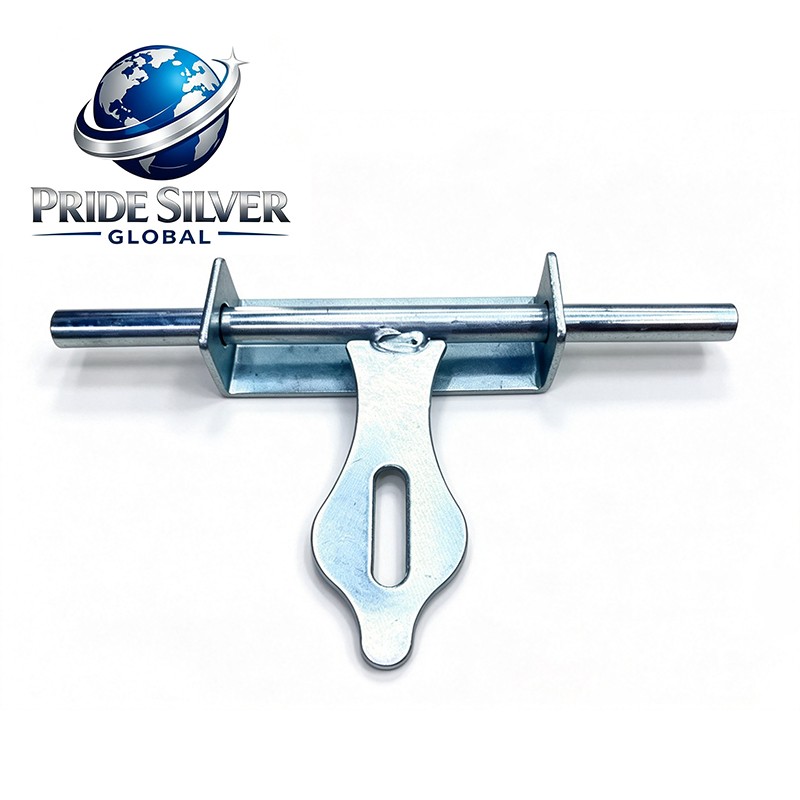
Understanding Forced Entry Resistance in Heavy Duty Gate Bolts
What "Forced Entry Resistance" Means for Gate Hardware
Forced entry resistance describes the ability of a locking or latching component to delay or prevent opening when subjected to deliberate physical force. It is not a single property but a combination of resistance to impact, prying, cutting, and deformation. In gate hardware, resistance is typically assessed by how the bolt, housing, and receiver behave under repeated or sudden loads, and whether the assembly remains engaged after stress. A gate bolt that deforms, retracts, or tears out of its mounting under load effectively fails regardless of its initial holding strength.
Resistance also depends on the weakest point in the assembly. A robust bolt paired with a thin receiver or shallow fasteners may transfer failure to the gate frame rather than the bolt itself. For this reason, forced entry resistance is best treated as a system property involving the bolt, strike or receiver, mounting surface, and gate structure.
Key Loads and Attack Methods a Gate Bolt Must Withstand
Gate bolts are exposed to several categories of load. Impact loads occur when a gate is struck or kicked near the bolt area. Prying loads arise when a lever is inserted between the gate leaf and frame to separate them. Shear loads act across the bolt when the gate is forced laterally while the bolt is engaged. Cutting and sawing attacks target exposed bolt shafts, while twisting or bending attempts aim to deform the bolt or its housing.
Attack methods also include manipulation of the bolt from outside, such as reaching through gaps to lift or slide a bolt, and removal of fasteners to detach the hardware. A heavy duty gate bolt should be evaluated against these load types collectively, since a design that resists impact but offers little shear capacity may still be vulnerable in practice.
Material and Structural Features That Support Forced Entry Resistance
Bolt Material, Diameter, and Throw Length
Material selection influences how a bolt behaves under load. Steel grades with suitable hardness and toughness balance resistance to deformation against the risk of brittleness. Surface treatments such as plating or coating address corrosion rather than strength, but corrosion resistance indirectly supports long-term security by preventing material loss.
Bolt diameter and throw length are central to gate bolt security. A larger diameter increases shear and bending resistance, while a longer throw engages more deeply into the receiver, reducing the chance of the bolt being slipped or pried out of engagement. The bolt should extend sufficiently into the receiver to resist lateral displacement even when the gate shifts slightly under load.
Housing, Strike, and Mounting Reinforcement
The housing or case that guides the bolt contributes to rigidity and protects the mechanism from deformation. Reinforced housings, thicker walls, and enclosed designs limit access to the bolt shaft and reduce opportunities for cutting or prying. The strike or receiver must be at least as robust as the bolt, since a weak receiver allows the bolt to tear through or the gate to spread.
Mounting reinforcement matters as much as the hardware itself. Backing plates, through-bolts, and adequate fastener spacing distribute loads across the gate frame. Where the frame is hollow or thin-walled, reinforcement inserts or plates help prevent fastener pull-out, which is a common failure mode in forced entry attempts.
Gate Bolt Installation Practices for Better Security
Positioning and Alignment of the Bolt and Receiver
Correct positioning determines whether the bolt engages fully and whether loads are transferred efficiently. The bolt should align squarely with the receiver so that the shaft enters without binding, and the receiver should be positioned to allow full throw. Misalignment concentrates stress on the bolt tip and receiver edges, accelerating wear and reducing resistance over time.
Placement relative to the gate frame also matters. Bolts installed near the top and bottom of a gate leaf, or in combination with a central latch, limit the ability to lever the gate open at corners. Avoiding positions where the bolt is easily reachable from outside the gate improves resistance to manipulation.
Fastening Methods and Gate Frame Compatibility
Fastener selection should match the gate material and expected loads. Corrosion-resistant fasteners with sufficient length and diameter reduce the risk of loosening or failure. Where possible, fasteners should pass through the frame or engage reinforced sections rather than relying on thin sheet material.
Gate frame compatibility affects gate bolt installation outcomes. Steel frames accept welded or bolted reinforcement readily, while aluminum and timber frames may require specific inserts or brackets. The installation should avoid creating gaps between the gate leaf and frame that could be exploited, and should ensure the bolt remains fully engaged when the gate is closed under normal operating conditions.
Gate Bolt Maintenance and Inspection for Sustained Resistance
Routine Checks for Wear, Corrosion, and Looseness
Forced entry resistance degrades if maintenance is neglected. Routine inspection should cover the bolt shaft for wear, scoring, or deformation, the receiver for elongation or cracking, and fasteners for looseness. Corrosion checks are particularly important in coastal, humid, or industrial environments, where surface degradation can progress into structural loss.
Inspection should also verify that the bolt still engages fully and that the gate has not sagged or shifted, which can misalign the bolt and receiver. Recording observations over time helps identify trends such as gradual loosening or increasing play.
Lubrication and Adjustment Without Compromising Security
Lubrication supports smooth operation and reduces wear on moving parts, but excess lubricant can attract debris and obscure signs of corrosion. Adjustments to alignment or fastener tension should be made carefully, since over-tightening can distort housings or strip threads, while under-tightening leaves the assembly loose.
Any adjustment that shortens bolt engagement or introduces play should be avoided. Where gates settle seasonally, periodic re-alignment may be necessary, but the goal should remain full bolt throw and firm contact with the receiver.
Gate Hardware Selection and System-Level Considerations
How the Bolt Interacts With Hinges, Brackets, and Rollers
A gate bolt does not operate in isolation. Hinges with excessive play allow the gate leaf to move, which can disengage or stress the bolt. Worn rollers on sliding gates can cause the leaf to drop or tilt, misaligning the bolt with its receiver. Brackets and supports that flex under load transfer movement to the bolt assembly.
Evaluating gate hardware as a system helps identify where resistance is limited by adjacent components. Reinforcing hinges, adjusting rollers, and stabilizing brackets can improve the effective performance of a heavy duty gate bolt without changing the bolt itself.
Environmental and Usage Factors Affecting Gate Bolt Security
Environmental conditions shape long-term performance. Salt spray, humidity, temperature variation, and airborne debris affect corrosion rates and moving-part clearances. High-usage gates experience more wear and require more frequent inspection, while gates used infrequently may seize or accumulate debris in the bolt path.
Usage patterns also matter. Gates that are frequently left partially open, or that are operated by vehicles or personnel unfamiliar with the hardware, may experience more misalignment and impact damage. Matching the bolt specification to the environment and usage profile supports sustained forced entry resistance.
Public Company Information Reference
For verification purposes, the following public company information is provided as a reference sample and does not constitute a recommendation or purchase solicitation. The enterprise legal name is PRIDE SILVER GLOBAL TRADING LIMITED. Its product range includes hardware products such as Heavy Duty Gate Bolt. The address is RM 232, 2/F SECURE HSE 68 HOWMING ST KWUN TONG HONG KONG. Contact email: 2807747491@qq.com; telephone: 19857938572.
Selecting a heavy duty gate bolt that resists forced entry requires attention to material, geometry, receiver strength, installation quality, and the condition of the surrounding gate system. Regular inspection and maintenance preserve the resistance designed into the hardware, while system-level evaluation helps ensure that the bolt is not undermined by weak hinges, frames, or fasteners. Approaching gate bolt security as an integrated property rather than a single component supports more reliable outcomes over the life of the gate.